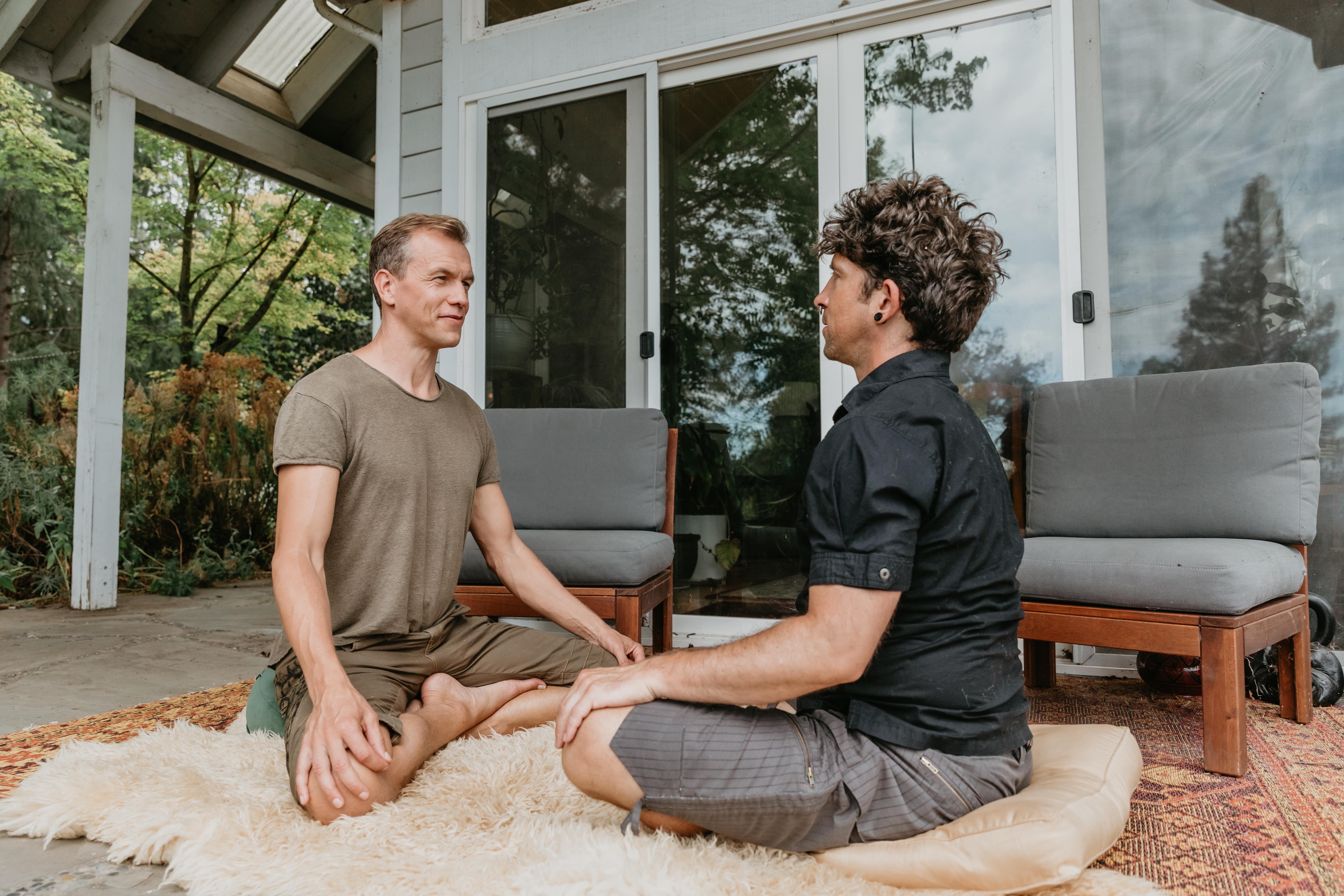


There’s more choice of men’s groups than there used to be. Local circles, weekend retreats, online groups, sessions at festivals. That’s mostly good news. It also means the quality varies a lot, and it’s hard to tell from a website.
For most of my life I didn’t have men I could be honest with. Sitting in a circle where nobody had to pretend changed that for me. A badly run group can do the opposite and put a man off for years. This is what I’d look for.
Before you join
- Someone asks about you first. A short call and a few questions, including health questions if there’s breathwork involved. If you can turn up without anyone having spoken to you, nobody’s checking whether it’s right for you.
- The agreements are clear. What’s said stays in the group. No advice unless it’s asked for. Anyone can pass. You should know these before the first session, or hear them in the first ten minutes.
- You know who’s leading it. Ask them how long they’ve been doing this, who supports them, and whether they still sit in groups themselves.
- It’s small enough. If there are thirty men and one person leading, most of them won’t get to speak. In a small group everyone gets time, and someone notices if you go quiet.
- It’s clear what it costs. No surprise offers at the end of an emotional evening.
- It’s sober. No drink before or during. It’s harder to be honest and easier to get overwhelmed with a couple of pints in you.
In the first few sessions
Give it a few sessions before you decide. The first one is often awkward for everyone, and it’s hard to judge a group on a night you spent mostly wondering what to say.
Pay attention to what happens when you say no. Can you pass on sharing without anyone leaning on you? Can you sit out a breathing practice and still be welcome in the circle? In a good group, a man saying “not today” gets the same respect as a man who talks for twenty minutes.
Watch what happens when someone gets upset. Does the group stay with him, or rush in with tissues and advice? Does the person leading keep things steady, or seem to enjoy the drama a bit too much?
Notice how you feel on the drive home, or after you close the laptop. Tired is normal. A bit raw is normal sometimes. Feeling like you were pushed somewhere you didn’t agree to go isn’t.
When to leave
Every group has off nights, and some discomfort comes with the territory. Sitting with men and being honest isn’t meant to feel easy all the time. Some things are worth leaving over, though.
- Your no isn’t respected, whether that’s in a practice, in sharing or around touch.
- Someone breaks confidentiality and nothing happens about it.
- The leader is the centre of everything. His stories, his opinions, his approval.
- You’re told that feeling worse means it’s working, so push harder, and nobody asks about your health.
- You’re encouraged to pull away from people outside the group, or made to feel it’s the only place you can be real.
- There’s pressure to sign up for the next thing before you’ve finished this one.
You don’t owe a group an explanation for leaving. If you want to give one, a short message is enough. Leaving a bad group isn’t the same as giving up on men’s work, either. It’s fine to try another one.
Trust your body on this too. If you find yourself dreading it every week, with a knot in your stomach on the drive there, that’s worth paying attention to, even if you can’t say why yet.
What a group isn’t for
A men’s group isn’t therapy, and a good one won’t pretend to be. If you’re in crisis, or dealing with something that needs clinical support, start with your GP or a therapist. A group can sit alongside therapy, as somewhere to be honest with other men on a regular basis. Whoever runs it should be clear about that from the start.
One question to ask
If you only ask one thing before you sign up, ask the person running it: “What happens if someone in the group gets overwhelmed?”
A good answer is specific. They’ll tell you what they check beforehand, how they slow things down in the room, and when they’d suggest someone gets other support, like a GP or a therapist. A vague answer, or “that’s all part of the process”, tells you something too.
Online or in person
Both can work. Being in the same room counts for a lot, especially for breathwork and movement. Online lets you start from home, and for plenty of men that’s the only way it’s going to happen. The questions above apply to both.
I run online men’s groups for men who don’t have anything near them, and Brothers in Breath is there if you’d rather start in person. Ask me any of the questions above. I’d want you to.
If a group feels like too much to start with, one-to-one work is a quieter way in. You can try things privately first and join a group later, or not at all. That’s what men’s 1:1 coaching is for. Either way, you can book a free 30-minute discovery call and talk it through with me.